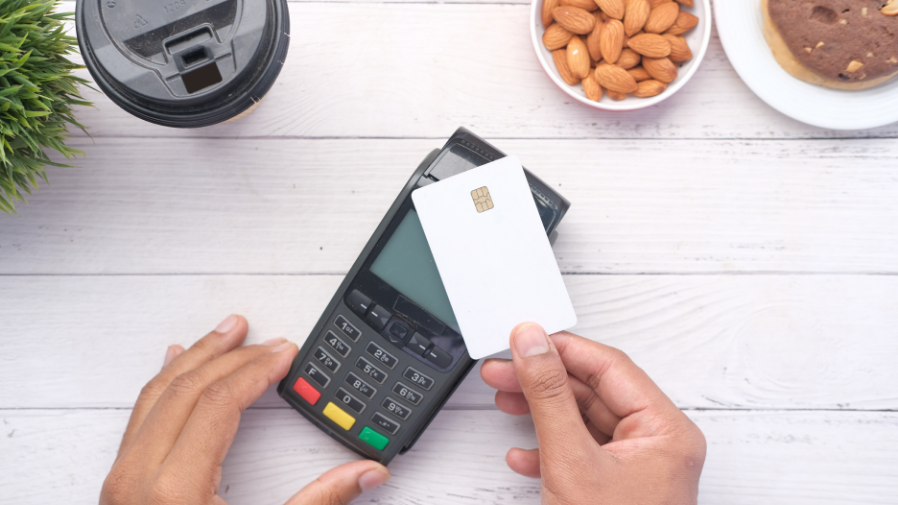
Self-service kiosks have moved from novelty to necessity in the restaurant and fast food industry. Driven by rising labor costs, evolving customer expectations, and advancements in technology, kiosks are now a strategic investment rather than an experimental add-on. But what is the real return on investment (ROI)? And how should operators think about deploying them effectively?
Why Kiosks Are Gaining Momentum
Restaurants today face a combination of pressures: staffing shortages, increasing wages, and the need to serve customers faster without sacrificing accuracy. At the same time, consumers are increasingly comfortable with digital ordering experiences.
Kiosks sit at the intersection of these trends. They offer a scalable way to increase throughput while improving the guest experience—but their full value is only realized when tightly integrated with payments, POS systems, and backend operations.
For solutions like OmniCore, the opportunity isn’t just kiosk hardware—it’s the connected ecosystem that drives measurable ROI.
Breaking Down the ROI
ROI from kiosks typically comes from four primary areas: labor savings, increased average order value, improved order accuracy, and operational efficiency. Importantly, these benefits are not theoretical—they are consistently backed by industry data.
- Up to 60% of QSR customers now prefer digital ordering like kiosks over traditional counters
- Restaurants commonly see 15–30% increases in average order value
- Many operators recoup kiosk investments in as little as 6–12 months
When kiosks are integrated with modern payment infrastructure and POS systems, these gains are amplified through faster transactions, better data capture, and fewer points of friction.
1. Labor Optimization (Not Just Reduction)
While kiosks are often associated with reducing headcount, the more accurate framing is labor optimization.
- Reassign staff from order-taking to food preparation or guest service
- Reduce dependency on peak-hour staffing
- Lower turnover impact in high-churn roles
When paired with integrated payments, kiosks also eliminate manual payment handling, reducing time per transaction and minimizing cashier-related bottlenecks.
In many cases, a single kiosk can offset a portion of one front-of-house position during peak periods, allowing operators to do more with the same team.
2. Increased Average Order Value (AOV)
One of the most consistent and measurable benefits of kiosks is higher ticket sizes.
- Automated upselling (add-ons, combos, upgrades)
- Visual menus that encourage discovery
- No social pressure, leading customers to spend more time browsing
Industry data shows restaurants typically see 15–30% higher order values when customers use kiosks, with some brands reporting up to 30% higher ticket averages.
When kiosks are connected to payment systems and loyalty programs, AOV increases even further through:
- Stored payment methods enabling faster checkout
- Personalized upsell prompts based on past purchases
- Seamless loyalty redemption and incentives at checkout
These integrations turn kiosks from static ordering tools into dynamic revenue engines.)
3. Improved Order Accuracy
Human error at the counter leads to remakes, refunds, and dissatisfied customers. Kiosks eliminate miscommunication.
- Customers input their own orders
- Clear customization options
- Fewer mistakes and less waste
When integrated directly with POS and kitchen systems, kiosks ensure orders flow instantly and accurately from screen to kitchen—eliminating re-entry errors and syncing payments with orders in real time.
This translates directly into cost savings and improved customer satisfaction.
4. Faster Throughput and Shorter Lines
Kiosks help restaurants serve more customers during peak hours.
- Parallel ordering (multiple kiosks vs. one cashier)
- Reduced bottlenecks at the counter
- Faster perceived service
Integrated payment processing plays a major role here. Faster, embedded payments reduce transaction times and eliminate delays caused by separate payment terminals.
Restaurants using kiosks can reduce service times by up to 40%, enabling significantly higher throughput during peak periods.
Higher throughput means more revenue opportunities, especially in high-traffic locations.
Quantifying the ROI
A simplified ROI model for kiosks might include:
Costs:
- Hardware and installation
- Software and maintenance
- Payment processing integration
Returns:
- Labor cost savings
- Incremental revenue from higher AOV
- Reduced waste from order errors
- Increased sales from higher throughput
When factoring in payments and integrations, additional ROI drivers emerge:
- Faster checkout times leading to more completed transactions
- Lower payment processing friction (tap-to-pay, mobile wallets)
- Increased loyalty participation and repeat visits
- Better reporting and data insights across locations
Real-world data reinforces the financial case:
- Many QSRs see ~12% total sales lift after deploying kiosks
- Some locations report weekly labor savings exceeding $500–$1,000
- Improved accuracy and reduced errors directly cut refund and waste costs
Most operators report payback periods between 6 to 18 months, depending on volume and implementation quality, with some achieving ROI even faster.
For platforms like OmniCore, the key differentiator is not just enabling kiosks—but powering the end-to-end transaction flow, from order to payment to reconciliation. (novatab.com)
Strategic Considerations for Deployment
Not all kiosk implementations deliver the same results. Success depends on execution.
Placement Matters
Kiosks should be clearly visible and easy to access upon entry. Poor placement reduces adoption.
UX Is Critical
A confusing interface can negate the benefits. The ordering flow should be intuitive, fast, and optimized for upselling.
Staff Training Still Matters
Employees play a key role in encouraging kiosk adoption and assisting customers when needed.
Hybrid Models Work Best
The most effective setups combine kiosks with traditional ordering methods, giving customers flexibility.
Beyond ROI: The Strategic Advantage
While financial return is important, kiosks also provide long-term strategic benefits:
- Data collection on customer preferences
- Integration with loyalty programs
- Consistent branding and messaging
- Future readiness for AI-driven personalization
These advantages position restaurants to compete in an increasingly digital-first landscape.
Fully Integrated & Cost Saving
Self-service kiosks are no longer just a cost-saving tool—they are a revenue driver and a customer experience enhancer. But the true ROI is unlocked when kiosks are fully integrated into the restaurant’s payment and operational ecosystem.
For OmniCore, this means enabling restaurants to:
- Process payments faster and more reliably
- Connect kiosks seamlessly with POS and backend systems
- Capture richer customer data for smarter decisions
- Deliver a frictionless, modern checkout experience
For restaurant operators willing to implement kiosks thoughtfully, the result is clear: measurable ROI in a short timeframe, stronger unit economics, and a scalable foundation for growth in a digital-first industry.